
A Level Bocce Court on a Danville Lot That Isn't Level
Most Danville yards roll, and most have oaks you can't touch. We cut and fill, retain the grade and route the water so a flat, true court sits in a sloping lot without starving a heritage tree or washing out in the first wet winter.
Since 2005
Building Bay Area landscapes
Certified wall installer
NCMA CSRWI retaining walls
Licensed C-27 & C-8
Licence 1059264
Free estimates
On-site, no obligation
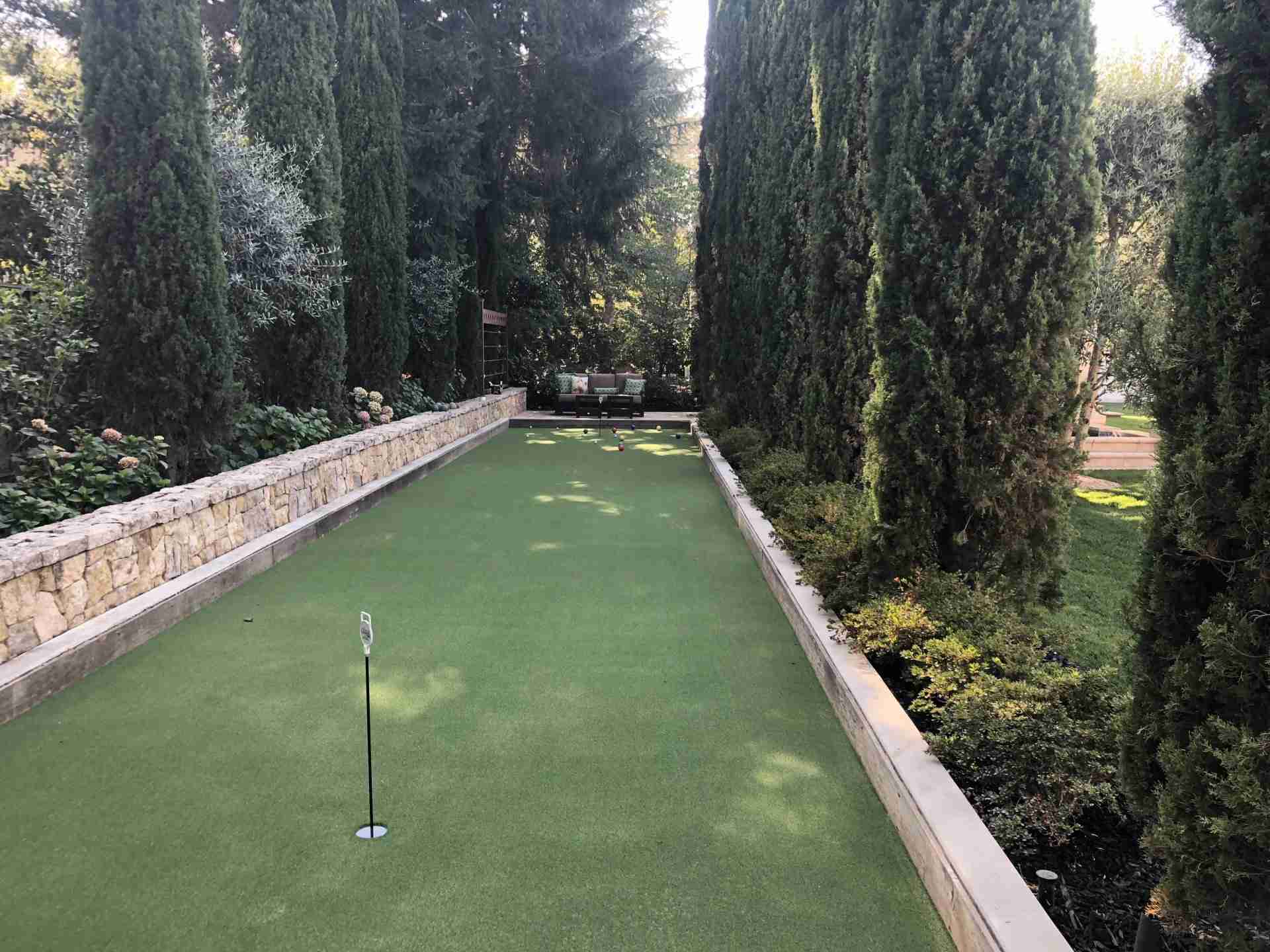
A level platform cut into a slope
Cut on the high side, fill on the low side, retained where the face demands it - the court platform comes before the court.
What a sloping Danville lot demands
On flat ground a court is base work. On a Danville hillside it is earthwork, retaining and drainage first.
Level is engineered, not found
Almost no Danville yard offers 60 to 90 feet of naturally flat ground. The court platform is created by cut and fill, and that platform has to be stable before anything else happens.
Cut deep enough and you need a wall
Past a certain depth the cut face has to be retained. Done properly, with drainage behind it, the wall lasts. Done as an afterthought, it bulges in a few wet winters.
The oaks were here first
Heritage oaks are protected, valuable and unforgiving. Grade changes and cut roots kill them slowly. We design the court to keep clear of the critical root zone.
Hillside water has to be routed
Everything uphill drains through your court platform. Drain rock and perforated pipe carry it past, which is the difference between a court that survives winter and one that scours.
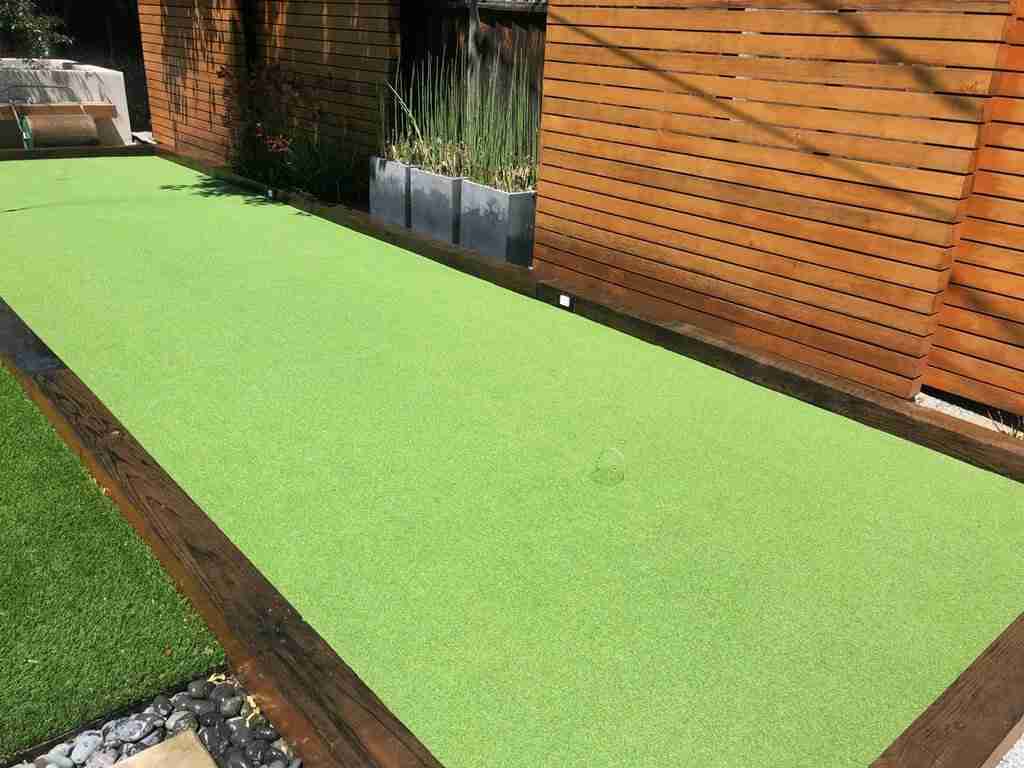
Past court installs
Courts, frames and surrounds from the Pavers and Turf project galleries.


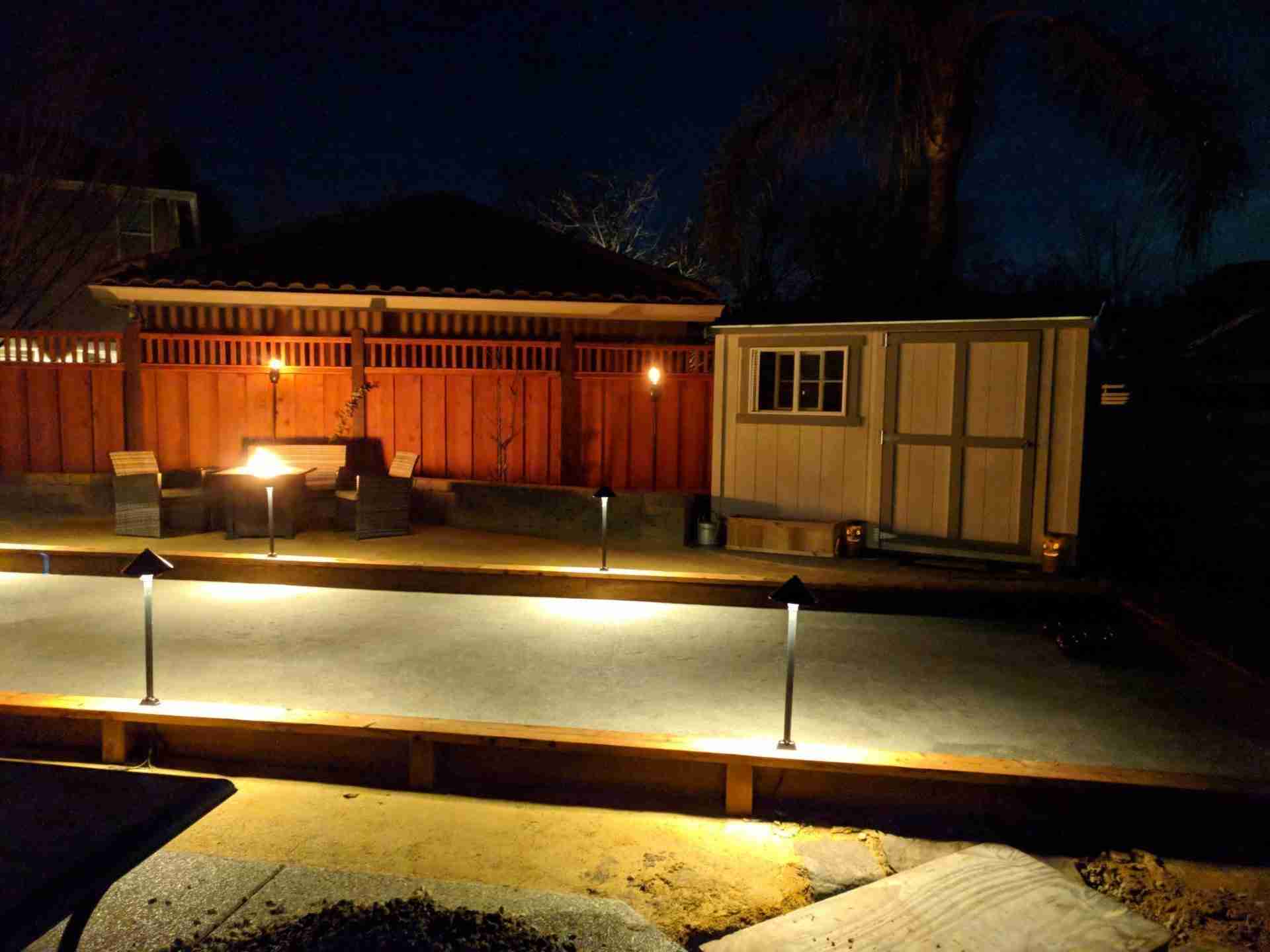
Bocce court services for Danville properties
Sloping ground, heritage oaks and larger lots - the three things that decide how a Danville court gets built.
Cut, fill and grade correction
We cut into the high side and build up the low side so a genuinely level court sits in a rolling lot, instead of a court that looks level only from the house.
Retaining where the grade demands it
Where the cut is deep enough to need holding back we build the wall properly, as an NCMA certified retaining wall installer, with gravel backfill and drainage.
Heritage oak protection
Danville oaks do not forgive severed roots or changed drainage. We hand-dig in the root zone and keep grade changes away from the critical root area.
Water management on a slope
A court on a hillside intercepts runoff. Drain rock, perforated pipe and considered fall keep that water moving past the court rather than through it.
Surface and surrounds
Crushed oyster shell, decomposed granite, gold fines or turf, finished with paver aprons and seat walls that suit a larger, established property.
Building a court into a Danville hillside
The earthwork stage is longer here than on a flat lot, and it is the stage that determines everything after it.
-
1
Site visit and grade assessment
We read the fall, find where water already runs, locate the oaks and identify where a level platform can go. Free and no obligation.
-
2
Cut, fill and retain
The platform is cut into the slope and built up on the low side, with retaining and gravel backfill wherever the cut face needs holding.
-
3
Drainage and base
Perforated drainage carries hillside water past the platform, then a 4 to 18 inch sub-base and 3 to 4 inches of drain rock and decomposed granite go in, compacted flat.
-
4
Frame, surface and surrounds
Borders 4 to 12 inches high, your surface of choice, and the paver aprons and seat walls that tie the court into the rest of the property.
Hillside water routed past the court
Drain rock and perforated pipe intercept what runs down from above, so winter runoff never crosses the playing surface.
Two ways to build on a slope
The shortcut
- Level by eye from the house
- Cut face left unretained
- Runoff crosses the court
- Trenching straight through oak roots
How we build it
- Platform cut and filled to a surveyed level
- Retaining built with gravel backfill and drainage
- Water intercepted and routed past the court
- Hand-dug inside the critical root zone
Bocce court questions from Danville homeowners
Our Danville yard slopes. Can we still have a full-length court?
Often yes, but it becomes an earthwork job. We cut into the high side and fill the low side to create a level platform. Whether a full 60 to 90 foot court fits depends on how much slope you have and where the trees are.
Will we need a retaining wall?
If the cut into the slope is deep enough, yes. We are an NCMA certified retaining wall installer and build the wall with gravel backfill and drainage as part of the court, not as an extra afterwards.
We have heritage oaks. Is that a problem?
It is a constraint we plan around rather than a blocker. We keep grade changes out of the critical root zone and hand-dig near trunks. Sometimes it means moving or shortening the court, which we will tell you at the estimate.
What stops winter runoff wrecking the court?
Interception and routing. Drain rock under the surface and perforated pipe carry hillside water past the platform. On a slope this matters more than the surface material you choose.
Which surface suits a hillside court?
Any of them, once the platform and drainage are right. Decomposed granite and gold fines are firm and suit the setting. Crushed oyster shell gives the quickest roll. Turf asks the least of you afterwards.
How long does a sloping site take?
The court itself is about one to two weeks, but earthwork and retaining on a steep lot can add to that. We give you a written schedule with the estimate.
Talk to us about your Danville court
Sloping lot, mature oaks, or both - tell us what you are working with and we will tell you what is possible.
Pavers and Turf by O'Neill's
- 2133 Research Dr Unit 16, Livermore, CA 94550
- (925) 443-7888
- [email protected]
- Mon–Fri, 8:00am–5:00pm
Pavers and Turf by O'Neill's, 2133 Research Dr Unit 16, Livermore, CA 94550. Phone (925) 443-7888, email [email protected]. Open Monday to Friday 8am-5pm; Saturday and Sunday closed. Full bocce court details, materials and past builds are on our main site at https://paversandturf.com/bocce-ball-courts/
Built around the oaks, not through them
Grade changes kept out of the critical root zone and hand digging near trunks, so a heritage tree survives the build.
Get a level bocce court on a Danville slope.
Earthwork, retaining, drainage and court in one scope from one licensed crew. Call (925) 443-7888 or see the full build details on our main site.